 Skip to content
As a driver, sun damage to your car’s paint is one of those problems you’d prefer to ignore—until the faded and cracked finish becomes too obvious to overlook.
I’ve seen it all in my two decades of automotive repair experience, from paint peeling off after months of sun exposure to vehicles whose finishes seem to lose their luster almost overnight. It’s frustrating, but the good news is that this is a fixable problem.
In this post, I’ll walk you through what causes sun damage, how to fix it yourself, and when to hand the task over to a professional. Whether you’re dealing with minor fading or more severe damage, these tips will help you make an informed decision on how to restore your car’s appearance.
How To Repair Sun Damaged Auto Paint? Quick Answer
To repair sun-damaged auto paint, start by cleaning the surface, sanding the affected areas, applying primer, and then repainting with matching auto paint. Finish by polishing and waxing the area for a smooth, glossy result.
For extensive sun damage, it’s often best to seek professional help for a thorough restoration to ensure a durable, flawless finish.
Understanding Sun Damage To Auto Paint
Sun damage is a common yet overlooked issue for many car owners, and it’s easy to understand why. The harsh UV rays from the sun cause the paint to oxidize, break down, and fade over time.
If you’ve parked your car under direct sunlight for long periods, especially in hot climates, you’ve probably noticed your car’s color becoming less vibrant, or even a bit dull and chalky.
What Causes Sun Damage To Car Paint?
Sun damage occurs because of a chemical reaction known as oxidation. The sun’s UV rays break down the paint’s protective clear coat, allowing the color layer beneath to lose its gloss and shine.
This process accelerates if your car is frequently exposed to sunlight without proper protection. Not only does the paint fade, but the underlying layers can become brittle and prone to cracking.
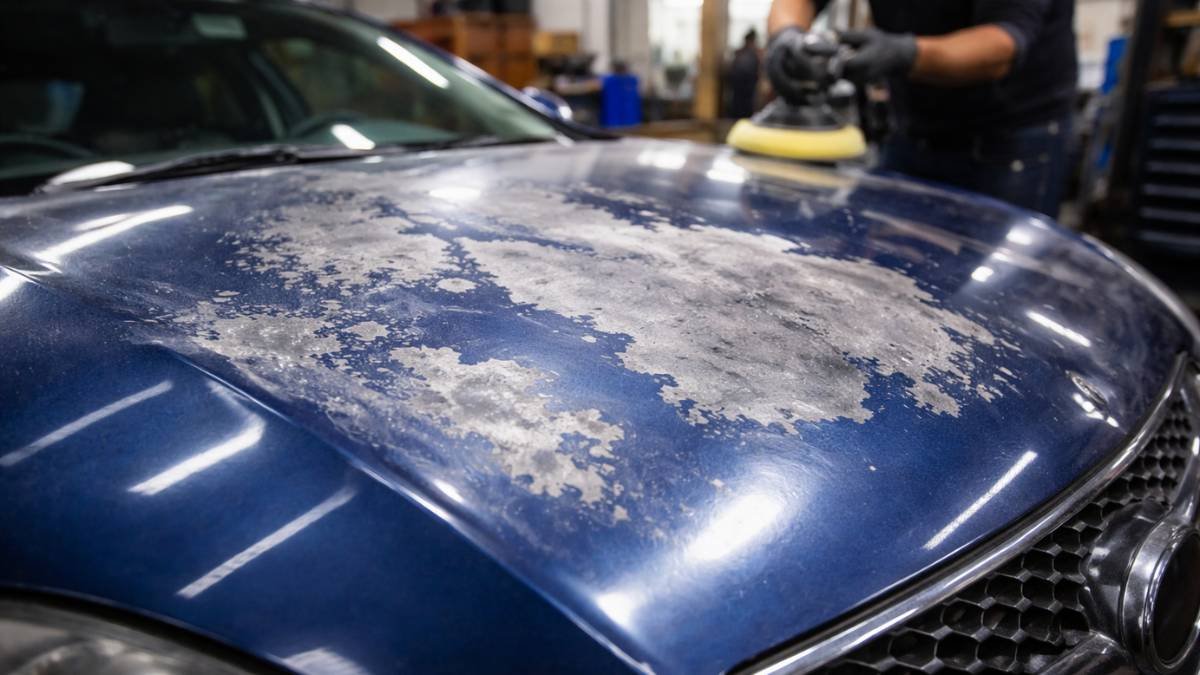
You may also notice the finish becoming rough to the touch or developing a “peeling” effect, especially on areas that are exposed to the sun more often, such as the roof, hood, and trunk.
Why Sun Damage Affects Car Paint Long-Term
If left untreated, sun-damaged paint won’t just look bad; it can also begin to deteriorate further. The paint may crack, and small chips can start to form, letting water seep in.
This can lead to rust and further damage to the car’s body, which costs more to repair in the long run. You’ll also have a harder time achieving a smooth, glossy finish if you wait too long to address the problem.
From my experience in the shop, I’ve seen many vehicles where neglecting sun damage has led to irreversible degradation of the paint job. Fixing the problem early gives you the best shot at restoring your vehicle’s appearance without costly bodywork.
How To Repair Sun Damaged Auto Paint? Follow These Steps

Now, let’s break down how you can repair sun-damaged paint yourself. While some cases may require professional help, there are definitely things you can do at home to improve the look of your car.
1. Cleaning The Car’s Surface
Before doing any repair work, it’s essential to start with a clean surface. Over time, dirt, dust, and other debris accumulate on your car’s paint, and these particles can make the damage worse during repair.
To begin, wash your car thoroughly with a car-safe shampoo and a microfiber cloth. Avoid using household dish soap, as it can strip your car’s wax and further damage the paint.
After washing, dry the car with a microfiber towel to prevent water spots. For sun-damaged areas, consider using a clay bar to remove any contaminants that are embedded in the paint. This step ensures the surface is as smooth as possible before moving on to repairs.
2. Preparing The Paint For Repair
Once the car is clean and dry, you’ll need to prep the damaged areas for touch-up work. If you’re dealing with minor fading or discoloration, you may only need to apply a fresh coat of paint or clear coat. For more serious sun damage, you’ll likely need to sand the affected areas.
Use fine-grit sandpaper (around 2000-3000 grit) to lightly scuff the damaged area. This step ensures that the new paint will adhere properly. Be careful not to sand too aggressively, as this could cause more harm than good.
If the paint is heavily oxidized, you may need to go deeper into the clear coat, but this is best done by a professional if you’re unsure.
3. Choosing The Right Paint
When choosing paint for your car, you’ll need to match it as closely as possible to your vehicle’s original color. You can either purchase touch-up paint from your car’s manufacturer or buy aftermarket paint. It’s important to get the right shade of color, so make sure you have your car’s color code on hand.
Aftermarket paints are often a good option for minor touch-ups, but factory-matched paint is usually the best choice for achieving a seamless repair. Also, consider buying a matching clear coat to apply after the color paint. This will protect the new paint and keep your car’s finish looking shiny.
4. Applying The Paint
Once you have the paint, it’s time to apply it. Start by applying a thin coat of paint to the sanded areas, working your way around the edges of the damage. Don’t try to cover the entire area at once—multiple thin layers will result in a smoother, more professional-looking finish. Allow each coat to dry before applying the next.
For small areas, a touch-up pen may be sufficient, but for larger sections, you might need to use a spray can or airbrush. If you’re not comfortable using spray paint, it’s best to leave this step to the professionals.
5. Buffing and Polishing The Repaired Area
Once the paint has dried and cured, use a polishing compound to buff the area. A polishing compound will help smooth out any uneven paint and restore the shine to the surface. You can apply it with a soft cloth, but if you have a buffer, that will make the job easier and faster.
Buffing helps eliminate any swirl marks left behind by the sandpaper and makes the surface smooth and glossy again. Follow up with a coat of wax to protect the paint and give it a beautiful shine.
Also Read: How To Repair Peeling Auto Paint?
When To Call A Professional For Auto Paint Restoration
If you’re dealing with extensive sun damage or the paint has started to peel, it may be time to call a professional. A mechanic or body shop with experience in auto paint restoration will be able to provide a more durable and flawless finish, particularly when dealing with larger surface areas or deep oxidation.
While DIY repairs are great for smaller jobs, professionals bring specialized equipment and techniques that ensure a longer-lasting result. If you’re unsure whether your car’s damage can be repaired at home, it’s worth consulting with a trusted auto repair shop.
Finding Trusted Auto Repair Shops For Paint Restoration

When it comes to auto paint restoration, finding a reliable shop is key. Not all auto repair shops are equipped to handle paint work, so it’s important to choose one that specializes in this area.
How To Evaluate Local Auto Repair Shops
Start by looking for auto repair shops with a strong reputation in your area. Customer reviews and ratings are great indicators of the quality of service you can expect. Be sure to check whether the shop has experience with paint restoration, as this is a specific skill set.
Many shops will list their certifications on their websites, so take note of any industry qualifications such as ASE certification.
Key Trust Signals For Selecting A Reliable Shop
A reliable auto repair shop will always have certified mechanics, and they’ll typically be ASE certified. This certification ensures that the technicians have the necessary skills and knowledge to repair your car properly.
Additionally, you should check for dealer-level training, as this indicates that the shop has access to high-quality training and parts directly from the vehicle manufacturer.
Also, a transparent shop will provide clear pricing upfront and a guarantee on their work. Customer testimonials play a crucial role here—be sure to read multiple reviews across various platforms to get a sense of the service quality.
What Makes Each Shop Stand Out
When evaluating shops, pay attention to the little details. Does the shop offer convenient hours for working customers? Is their service area clean and organized? Shops that take pride in their operations are more likely to do high-quality work on your car.
Consider reaching out to the shop and asking about their process for handling sun damage repairs—good shops will be more than happy to explain their approach.
Also Read: How To Repair Auto Paint Scratches?
Final Thoughts
When selecting a shop for sun damage repair, it’s important to choose a provider that offers not only skill but also transparency. A great shop will have certified, experienced technicians, clear communication, and a reputation for quality.
At AHS Rankers, we’re committed to guiding you through the process of finding trusted auto repair services based on real-world trust signals. Our expert-driven rankings and reviews help ensure that you make the best choice for your vehicle without the guesswork.




Add your first comment to this post