 Skip to content
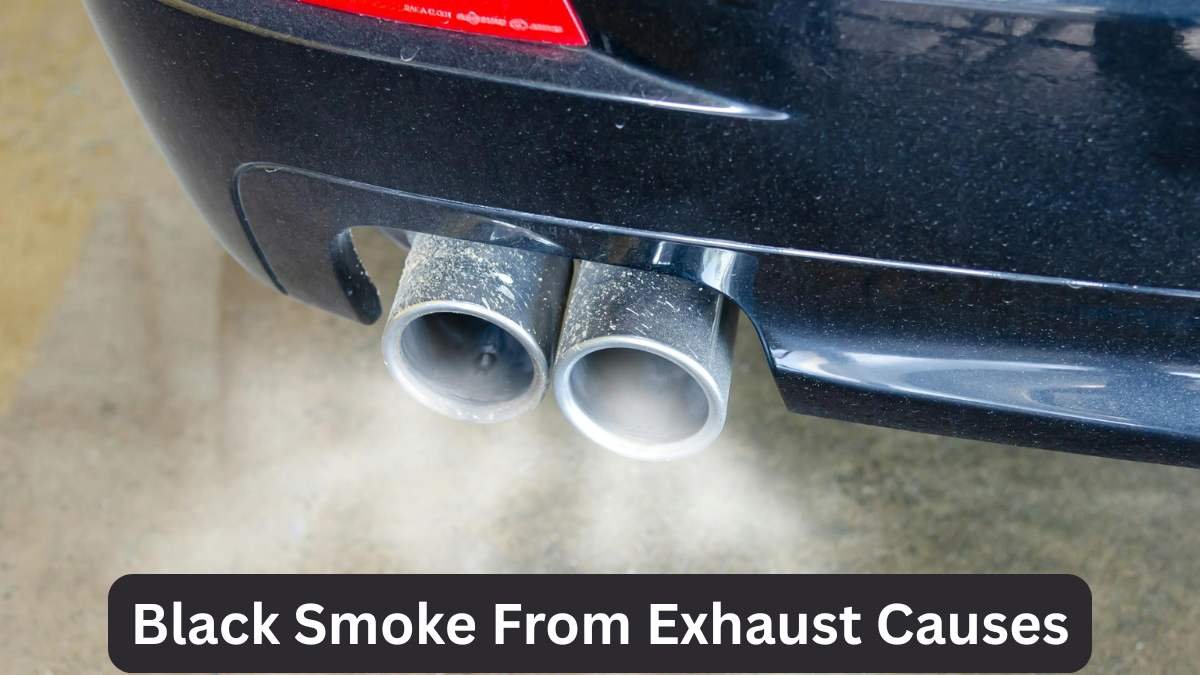
A cloud of black smoke pouring from your exhaust is enough to make any driver uneasy. In most cases, black smoke from exhaust causes can be traced to a problem affecting the engine’s air-to-fuel balance rather than a complete engine failure.
Moreover, I’ve met countless vehicle owners who assumed the worst the moment they noticed dark smoke in the rearview mirror, while others ignored it until fuel economy dropped and the repair bill grew much larger.
So, as an ASE-certified automotive professional having experience of more than 20 years, I’ve diagnosed this issue in everything from compact sedans to heavy-duty diesel trucks. Above all, in this case, what sets AHS Rankers apart from paid directories is that we prioritize transparent expertise and real-world automotive knowledge so drivers can approach repairs with confidence instead of uncertainty.
Therefore, in this guide, I will explain what black smoke is, why it occurs, and how experienced technicians identify the root cause before recommending repairs. Let’s dive into details!
What Does Black Smoke From the Exhaust Mean?

Black smoke isn’t simply an appearance issue. It tells an important story about what’s happening inside your engine. Before replacing parts or worrying about a major breakdown, it’s important to understand what the smoke is trying to tell you.
From my experience in the auto repair shop, the color of exhaust often provides the first clue toward an accurate diagnosis.
Why Proper Combustion Matters
Your engine depends on a carefully controlled mixture of fuel and air. Every combustion cycle is designed to burn almost all of the fuel entering the cylinders. When that balance changes, the engine can no longer burn fuel efficiently, and excess fuel exits through the exhaust as black smoke.
From my experience in the shop, this is one of the most common explanations behind black exhaust. Modern engines constantly adjust fuel delivery using information from multiple sensors. If one of those sensors sends incorrect data or airflow becomes restricted, the engine control module may inject more fuel than necessary.
What this really means for drivers is lower fuel economy, sluggish acceleration, increased emissions, and unnecessary wear on expensive engine components. The sooner the underlying cause is identified, the easier and less expensive the repair usually becomes.
Is Black Smoke Always a Serious Problem?
Not always. Context matters.
A brief puff of black smoke during hard acceleration, especially in older diesel vehicles, may not indicate a major issue. However, continuous black smoke during normal driving deserves immediate attention.
I’ve inspected vehicles where a simple clogged air filter caused the problem. I’ve also seen severe injector failures, damaged turbochargers, and faulty engine computers produce the same symptom. That’s why guessing rarely works.
Persistent smoke usually means the engine has been operating inefficiently for some time. Delaying repairs can damage the catalytic converter, reduce engine performance, and increase fuel costs. A professional diagnosis almost always saves money compared to replacing parts based on assumptions.
Most Common Black Smoke From Exhaust Causes

Black smoke can come from several different systems working together inside the engine. Let’s break it down by examining the problems I encounter most often during real-world inspections.
Clogged or Dirty Air Filter
An engine needs plenty of clean air for complete combustion. When the air filter becomes clogged with dust, dirt, leaves, or debris, airflow drops significantly while fuel delivery remains nearly the same.
The result is a rich air-fuel mixture that produces black smoke.
This issue often develops gradually, making it easy to overlook. Drivers usually notice slower acceleration, reduced fuel mileage, and less responsive throttle before realizing anything is wrong.
Fortunately, replacing an air filter is one of the simplest maintenance services available. During routine inspections, I always examine the filter first because it’s inexpensive, easy to access on most vehicles, and capable of causing surprisingly noticeable performance problems.
Faulty Fuel Injectors
Fuel injectors must deliver an extremely precise amount of fuel into each cylinder. Even a slight malfunction can upset the combustion process.
A leaking injector continues releasing fuel after it should close, while a stuck injector may spray far more fuel than the engine requires. Both situations commonly create thick black exhaust smoke.
Drivers often report rough idling, difficulty starting, poor fuel economy, and a noticeable fuel odor. Diagnostic testing usually includes injector balance tests, fuel pressure measurements, and scan tool analysis before replacement is recommended.
Replacing injectors without confirming the failure can become unnecessarily expensive, which is why accurate testing matters.
Dirty or Failing Mass Air Flow (MAF) Sensor
The Mass Air Flow (MAF) sensor measures the amount of air entering your engine. The engine computer uses that information to determine exactly how much fuel to inject.
When the sensor becomes contaminated with dirt or oil residue, airflow readings become inaccurate. The computer often responds by supplying excess fuel, producing black smoke.
I’ve corrected many vehicles simply by cleaning the sensor with the proper electronics-safe cleaner. Other cases required replacement because the sensor itself had failed internally.
The important point is that diagnosis comes before replacement.
Malfunctioning Oxygen Sensors
Modern engines rely heavily on oxygen sensors to monitor combustion efficiency. These sensors constantly measure oxygen levels in the exhaust stream and help fine-tune fuel delivery.
When an oxygen sensor sends incorrect information, the engine computer may assume the mixture is too lean and compensate by adding extra fuel.
Black smoke, poor fuel economy, rough performance, and an illuminated Check Engine Light frequently appear together.
From my experience in the shop, oxygen sensors often fail gradually. Drivers become accustomed to declining performance without realizing the engine has been wasting fuel for months.
Stuck Fuel Pressure Regulator
Fuel pressure must remain within a very specific operating range. A faulty pressure regulator may allow excessive fuel pressure to reach the injectors.
Higher pressure forces additional fuel into the combustion chambers, even though the injectors themselves may still function correctly.
This condition often produces difficult starting, rough idle, black smoke, and poor fuel economy.
Fuel pressure testing quickly confirms whether the regulator is performing correctly. It’s a straightforward diagnostic step that prevents unnecessary injector replacement.
Turbocharger Problems (Especially Diesel Engines)
Turbochargers increase engine airflow by compressing incoming air. More air allows cleaner combustion and better performance.
When a turbocharger develops worn bearings, damaged compressor blades, boost leaks, or control problems, airflow decreases dramatically. Fuel delivery may remain unchanged, creating excessive black smoke.
Diesel engines are particularly sensitive to turbocharger problems because they rely heavily on boosted airflow.
Drivers often notice reduced power, slower acceleration, unusual turbo noises, and increased smoke during acceleration. Comprehensive turbo inspection includes boost pressure testing, intake leak checks, and physical inspection of turbo components.
ECU or Engine Management Problems
Today’s vehicles depend on sophisticated computers that continuously adjust ignition timing, fuel delivery, emissions controls, and engine performance.
Software problems, damaged wiring, or failed sensors can confuse the engine control module into commanding an excessively rich fuel mixture.
These faults rarely produce only one symptom. Black smoke may appear alongside poor shifting, inconsistent idle, warning lights, reduced power, and multiple diagnostic trouble codes.
Professional scan tools capable of reading live engine data become essential during diagnosis because replacing random sensors rarely solves electronic control issues.
Diesel Particulate Filter (DPF) or EGR Problems
Diesel engines introduce additional components that can contribute to black smoke.
A clogged Diesel Particulate Filter (DPF) restricts exhaust flow, while a malfunctioning Exhaust Gas Recirculation (EGR) valve disrupts combustion temperatures and airflow.
Both systems play critical roles in reducing emissions.
Incomplete DPF regeneration, excessive soot buildup, or sticking EGR valves commonly produce visible black smoke under acceleration.
Accurate diagnosis usually combines computer scanning with pressure measurements and regeneration testing rather than immediately replacing expensive emissions components.
Symptoms That Often Accompany Black Exhaust Smoke
Black smoke rarely appears by itself. In my experience, it usually comes with several other warning signs that help pinpoint the underlying problem. Paying attention to these symptoms before visiting a repair shop gives both you and the technician a clearer picture of what’s happening inside the engine.
Reduced Fuel Economy
One of the first complaints I hear is, “I’m filling up more often than I used to.” That’s no coincidence.
When an engine runs with too much fuel, it burns more gasoline or diesel than necessary to produce the same amount of power. Even if the vehicle still drives normally, your fuel costs can climb surprisingly fast.
Fuel economy often declines gradually, making it easy to blame traffic, weather, or longer commutes. A rich-running engine, however, can reduce efficiency by several miles per gallon. If black smoke and poor fuel economy appear together, I immediately begin checking the air intake, fuel system, and engine sensors before looking elsewhere.
Loss of Engine Power
Many drivers expect extra fuel to create more power, but the opposite usually happens.
An engine that receives too much fuel cannot burn it efficiently. Instead of producing smooth combustion, excess fuel disrupts the combustion process, leading to hesitation, sluggish acceleration, and reduced performance.
From my experience in the shop, customers often notice their vehicle struggling to merge onto highways or climb steep grades. Some describe the throttle as feeling “lazy” or “heavy.” These performance changes frequently point toward airflow restrictions, injector issues, or turbocharger problems rather than internal engine damage.
Power loss combined with black smoke should never be ignored because both symptoms often share the same root cause.
Check Engine Light
The Check Engine Light is one of your vehicle’s most valuable warning systems. While it doesn’t identify the exact problem by itself, it tells you that the engine computer has detected something outside normal operating limits.
Black smoke is commonly accompanied by diagnostic trouble codes related to fuel delivery, oxygen sensors, air intake systems, fuel trim values, or emissions controls.
I’ve seen many drivers clear the warning light with an inexpensive scan tool, only to have it return days later because the underlying fault was never repaired.
A professional diagnostic scan looks beyond the stored code. Live data, sensor readings, and fuel trim information often reveal the real problem far more accurately than the fault code alone.
Strong Fuel Smell
A noticeable fuel smell around your vehicle often supports the diagnosis of an overly rich air-fuel mixture.
When too much fuel enters the combustion chamber, some of it leaves the engine without burning completely. That unburned fuel creates a strong gasoline or diesel odor, especially during idling or acceleration.
In some cases, the smell may also indicate leaking injectors or problems within the fuel system itself. Although the odor isn’t always dangerous, it should never be dismissed.
Whenever I notice both black smoke and a strong fuel smell during an inspection, I perform a careful examination of the fuel delivery system before recommending repairs. Catching a leak early can prevent both safety concerns and more expensive engine damage.
Signs You Shouldn’t Ignore
Certain symptoms indicate the vehicle needs professional attention as soon as possible:
- Thick black smoke continues after the engine reaches operating temperature.
- Fuel economy drops noticeably over a short period.
- The Check Engine Light remains illuminated.
- The engine idles roughly or stalls unexpectedly.
- Acceleration feels weak or inconsistent.
- Black smoke becomes heavier while climbing hills or accelerating.
- A strong fuel odor develops around the vehicle.
- Engine performance continues to get worse despite regular maintenance.
How Mechanics Diagnose Black Smoke Problems

Proper diagnosis separates experienced technicians from guesswork. Two vehicles can produce identical black smoke while having completely different underlying problems. That’s why I never recommend replacing parts until testing confirms the actual cause.
Visual Inspection
Every diagnosis starts with a careful visual inspection.
I first examine the air filter, intake ducting, vacuum hoses, intercooler pipes, and visible wiring. Cracked hoses, loose clamps, damaged connectors, or clogged filters can often explain poor airflow without requiring extensive disassembly.
The exhaust system is also inspected for excessive soot buildup or leaks that may point toward combustion problems. These simple checks frequently identify obvious issues before more advanced testing begins.
Visual inspections may seem basic, but they save time, reduce repair costs, and prevent unnecessary parts replacement.
Computer Diagnostic Scan
Modern vehicles store an incredible amount of information inside the engine control module.
A professional scan tool retrieves diagnostic trouble codes while also displaying live engine data. Instead of relying only on fault codes, I evaluate fuel trim values, airflow readings, oxygen sensor activity, boost pressure, and engine load under different driving conditions.
Live data often tells a much more complete story than a single warning light.
This step allows technicians to determine whether the problem originates from the fuel system, air intake, emissions controls, or electronic engine management before replacing any components.
Fuel System Testing
When black smoke suggests excess fuel delivery, the next step is verifying the fuel system itself.
Fuel pressure testing determines whether the pressure regulator operates correctly. Injector balance testing checks whether every injector delivers the proper amount of fuel, while leak-down testing identifies injectors that continue leaking after shutdown.
From my experience in the shop, fuel testing eliminates much of the guesswork associated with rich-running engines. These tests provide measurable results that support accurate repair decisions instead of assumptions.
Air Intake and Turbo Inspection
Airflow problems are just as common as fuel delivery issues.
During this stage, I inspect the air filter, intake piping, Mass Air Flow (MAF) sensor, throttle body, intercooler, and turbocharger when equipped. Diesel engines receive additional boost pressure testing to verify proper turbo operation.
Restricted airflow often produces symptoms nearly identical to those of faulty injectors. That’s why a complete inspection of the intake system remains an essential part of every black smoke diagnosis.
Only after all testing is complete do I recommend replacing components?
Typical Diagnostic Steps
A thorough inspection generally includes:
- Reading diagnostic trouble codes
- Inspecting the complete air intake system
- Testing fuel pressure
- Evaluating fuel injector performance
- Checking oxygen sensor operation
- Inspecting turbocharger performance
- Performing a controlled road test
- Verifying the repair after completion
These steps create a logical process that identifies the real fault while avoiding unnecessary repairs.
How to Fix Black Smoke From Exhaust
Repairing black smoke isn’t about treating the symptom; it’s about correcting the cause. The appropriate repair depends entirely on what the diagnostic process reveals. In many cases, fixing the problem early prevents additional damage to expensive components like the catalytic converter, turbocharger, or diesel particulate filter.
Common Repairs
The repair itself can range from routine maintenance to replacing worn engine components.
Some vehicles simply need a new air filter or a cleaned MAF sensor. Others require fuel injector replacement, oxygen sensor replacement, turbocharger repairs, or software updates for the engine control module.
I always recommend addressing the confirmed fault rather than replacing multiple parts in hopes of solving the issue. Accurate diagnosis almost always results in lower repair costs and better long-term reliability.
Repair prices vary depending on the vehicle, the failed component, and labor requirements, but early intervention is nearly always less expensive than delaying repairs.
Can You Continue Driving?
Many drivers ask whether it’s safe to continue driving while black smoke is coming from the exhaust.
The answer depends on how severe the problem is. A small amount of occasional smoke may allow you to drive to a repair facility, but continuous black smoke should be inspected as soon as possible.
Driving for extended periods with a rich-running engine can overheat the catalytic converter, contaminate engine oil, increase carbon deposits, and reduce overall engine life.
From my experience in the shop, waiting rarely makes the repair cheaper. Minor issues often become major repairs when ignored.
Preventing Black Exhaust Smoke
Regular maintenance remains the best defense against black smoke problems. Simple services performed on schedule help the engine maintain the proper air-fuel mixture and reduce unnecessary wear.
Good preventive habits include:
- Replacing the air filter at recommended intervals.
- Using high-quality fuel from reputable stations.
- Following the manufacturer’s maintenance schedule.
- Addressing the Check Engine Light promptly.
- Inspecting the fuel system during routine service.
- Keeping sensors clean and functioning correctly.
- Having diesel emission systems serviced when required.
Consistent maintenance not only improves fuel economy but also extends the life of your engine and emissions components.
Final Thoughts
Well, now you would have learned a lot about the black smoke from exhaust causes that is more than an inconvenience; it’s your engine’s way of telling you that something isn’t operating as it should. In most cases, the problem stems from an imbalance between fuel and air caused by issues such as clogged air filters, faulty injectors, sensor failures, or turbocharger problems.
Besides, identifying the root cause early can prevent higher fuel costs, poor performance, and expensive component damage.
More importantly, here at AHS Rankers, my goal is to help drivers make informed automotive decisions through practical, experience-based guidance rather than speculation. As an ASE-certified automotive professional with more than two decades of hands-on repair experience, I believe every diagnosis should be based on evidence, thorough testing, and honest recommendations.





Add your first comment to this post