 Skip to content
 A small rust bubble on your fender rarely stays small for long. I’ve seen plenty of drivers ignore that first sign, only to return months later with a hole you can push a finger through. Rust spreads quietly under paint, especially in climates where moisture, road salt, and debris attack exposed metal.
Understanding how to repair auto body rust holes starts with knowing what causes them and how quickly corrosion can escalate. During my 20+ years as an ASE-certified technician, I’ve repaired everything from tiny rust spots on commuter cars to large panel perforations on older trucks.
What most drivers want is simple: a repair that actually lasts. Some rust holes can be fixed with careful prep and patching. Others require cutting out damaged metal entirely. Let’s start with the basics—why these holes form in the first place.
Why Rust Holes Form In Car Body Panels
Rust rarely appears overnight. Corrosion usually begins beneath paint or protective coatings and slowly spreads until the metal weakens and eventually breaks through.
In many cases, rust holes start as minor surface damage that drivers barely notice. What looks like a harmless paint bubble can hide corrosion spreading underneath the surface.
What this really means for drivers is simple: early rust often looks cosmetic but can hide deeper structural damage. Once oxidation eats through the thickness of the metal, the panel loses strength and perforation occurs.
Understanding where rust begins and how it develops makes it much easier to decide whether a panel can be repaired or should be replaced.
How Rust Starts On Vehicle Metal
Rust forms when steel reacts with oxygen and moisture, creating iron oxide that slowly weakens the metal structure. Automotive paint normally protects the panel, but even a small chip or scratch can expose bare steel.
Road salt dramatically accelerates the process. Winter driving conditions allow salt and moisture to sit on the vehicle surface, especially around seams and wheel wells. Over time, corrosion begins creeping beneath surrounding paint.
Drivers often notice bubbling paint as the first warning sign. That bubble forms because rust expands under the paint layer. Eventually the paint cracks or flakes away, exposing the weakened metal beneath.
What begins as a cosmetic issue can eventually eat straight through the panel, creating the rust holes that most vehicle owners worry about.
Common Areas Where Rust Holes Appear
Certain areas of a vehicle are naturally more vulnerable to rust. These locations tend to collect moisture, road debris, and salt, which gradually break down protective coatings.
Vehicles that spend time in wet climates or snowy regions typically develop corrosion in predictable areas:
- Wheel arches and fender edges
- Rocker panels along the lower body
- Bottom edges of doors
- Trunk lids and tailgate seams
- Undercarriage structural supports
Water tends to collect in these areas after rain or snow. Dirt buildup makes things worse by holding moisture against the metal surface.
Many drivers first notice rust during routine washing or maintenance. A small bubble near a wheel arch may not look serious, but corrosion inside the panel may already be spreading.
Rust rarely forms in isolation. When one area shows damage, nearby panels often deserve a closer inspection.
Signs Rust Is Becoming A Structural Problem
Surface rust is usually cosmetic, but deeper corrosion can weaken the structure of the panel. The difference becomes clear when metal begins deteriorating beneath the paint layer.
One warning sign is flaking metal around the rust spot. As corrosion penetrates deeper, the steel becomes thin and brittle. Sometimes light pressure causes rusted sections to crumble.
Swelling or warping around the damaged area is another indicator. Rust expands as it forms, pushing outward against surrounding metal and paint.
Drivers often ask a simple question: “Can this still be repaired?”
The answer depends on how much solid metal remains. Small perforations can usually be patched or filled. Large holes or widespread corrosion often require replacing the entire panel.
Addressing rust early makes repairs far easier, and significantly less expensive.
Also Read: How To Fix Auto Rust Spots?
Tools and Materials Used For Rust Hole Repair
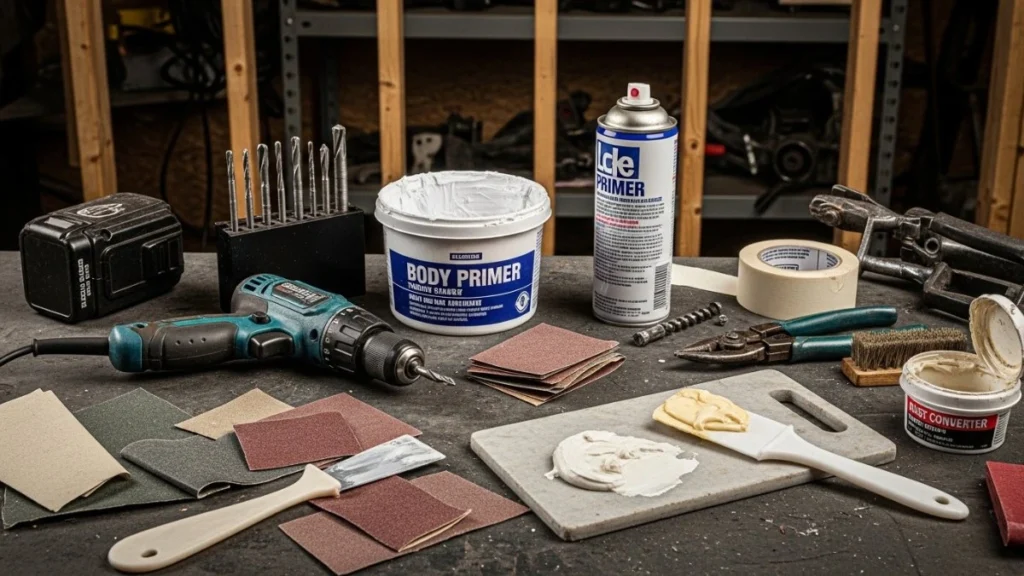
Proper rust repair involves more than covering the damaged area. The difference between a temporary cosmetic fix and a long-lasting repair usually comes down to preparation and the materials used.
Many failed repairs happen because corrosion wasn’t completely removed or the wrong products were applied. Good tools help eliminate rust thoroughly, while quality materials rebuild and protect the metal afterward.
Let’s break down the tools and materials typically involved in repairing rust holes.
Basic Tools for Rust Repair
Rust removal is the foundation of any successful repair. If corrosion remains beneath a patch or filler, it will continue spreading and eventually ruin the repair.
An angle grinder or dual-action sander is commonly used to grind away rust and weakened metal. These tools expose solid steel beneath the damaged area so repairs can bond properly.
Wire brushes also play an important role. They remove loose rust flakes and reach tight corners or seams that grinders cannot easily access. Sandpaper is then used to smooth the metal surface and prepare it for repair materials.
Safety equipment matters just as much as the tools themselves. Rust dust and grinding debris can be hazardous.
Proper protection should always include:
- Protective gloves
- Eye protection
- A respirator mask
Rust repair creates significant dust and debris. Safety gear protects both the technician and the quality of the repair process.
Materials Used In Auto Body Rust Repair
After rusted metal is removed, the damaged panel must be rebuilt and protected. The materials used depend largely on the size of the hole and the type of repair required.
Rust converters are often applied first. These chemical products neutralize remaining corrosion and stabilize the surface before repairs continue.
Fiberglass repair kits are another common option. Fiberglass mesh combined with resin creates a strong backing behind damaged metal, allowing the panel to regain structure.
Automotive body filler is then used to smooth the repaired surface and restore the original panel shape.
Before painting, the repair must be sealed with primer to protect exposed metal and ensure paint adhesion.
Common rust repair materials include:
- Fiberglass mat or cloth
- Automotive body filler
- Rust converter solution
- Self-etching primer
Quality materials play a major role in how long a rust repair lasts.
How To Repair Auto Body Rust Holes? Steps To Follow
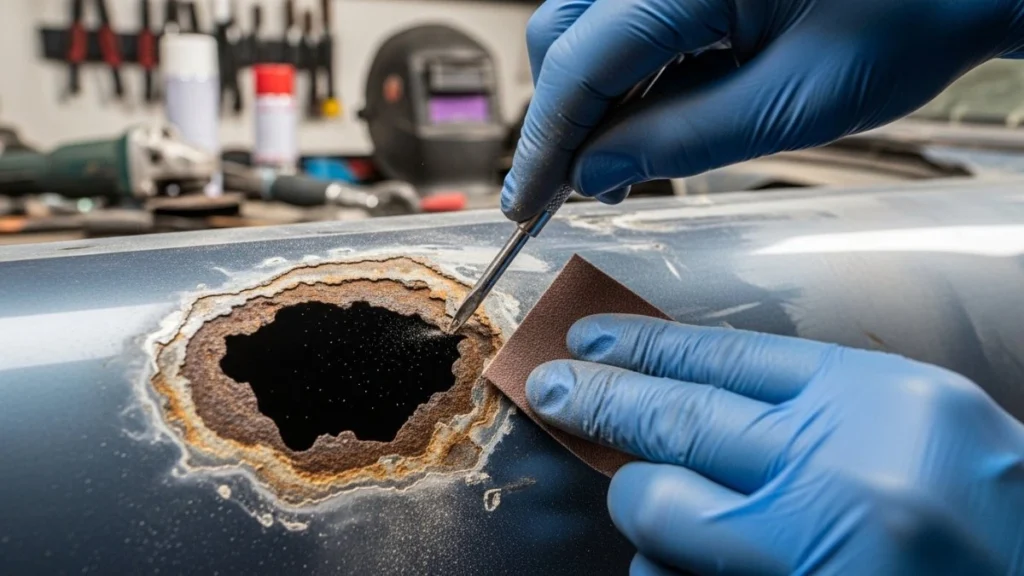
Rust hole repair follows a structured process. Skipping steps almost guarantees that corrosion will return later.
The goal is not simply hiding the damage but removing rust completely and rebuilding the panel so it remains protected.
The exact repair method depends largely on the size of the hole and the condition of the surrounding metal. Small areas may be repaired with filler and treatment, while larger perforations often require welding.
Let’s walk through the methods commonly used in professional repair work.
Step 1: Remove All Rust and Loose Metal
The first and most critical step is eliminating every trace of rust and weakened metal.
Grinding tools or sanding discs strip corrosion away until solid steel becomes visible around the damaged area. This ensures the repair bonds to stable metal rather than deteriorating material.
Partial rust removal is one of the most common reasons repairs fail. Even small traces left behind can allow corrosion to continue spreading under paint or filler.
Cleaning the surrounding area is equally important. Dirt, grease, and paint residue prevent repair materials from bonding correctly.
Extending the sanding area slightly beyond the visible rust helps create a clean and stable surface for the repair.
Step 2: Treat The Area With Rust Converter
Even after grinding, tiny particles of corrosion can remain on the metal surface.
This is where rust converters become essential. These chemical treatments react with oxidation and convert it into a stable compound that stops corrosion from spreading further.
The product is typically brushed or sprayed onto the prepared metal surface before patching begins.
Rust converter must fully cure before additional repair materials are applied. Depending on temperature and humidity, drying may take several hours.
Skipping this step can allow rust to return beneath the repair, eventually causing the panel to fail again.
Proper rust treatment significantly extends the life of the repair.
Step 3: Repair Small Rust Holes With Body Filler
Small rust holes or pitted metal areas can often be repaired using automotive body filler.
This method works best when the surrounding metal remains structurally sound. After rust treatment, filler is mixed with a hardener and applied across the damaged area.
Thin layers are typically applied rather than a single thick layer. Each layer must cure before sanding and applying the next one.
Once hardened, the filler is carefully sanded to match the shape and contour of the original panel.
A properly shaped repair allows the panel to blend naturally after painting.
Step 4: Patch Medium Holes With Fiberglass
Medium-sized rust holes often require reinforcement behind the repair area.
Fiberglass repair kits provide a durable solution without the need for welding equipment. The process usually begins by placing fiberglass mesh behind the damaged section.
Resin is then applied over the mesh and surrounding metal. Once cured, the fiberglass hardens into a solid patch that supports filler and paint.
Fiberglass repairs are commonly used for non-structural body panels such as doors, quarter panels, and fenders.
When applied correctly, fiberglass patches can hold up well for many years.
Step 5: Welding Patch Panels For Larger Rust Holes
Large rust holes require a more permanent repair method.
The damaged metal must first be cut away completely. Removing the weakened steel exposes solid surrounding metal where a repair patch can be attached.
A replacement piece of sheet metal is then shaped to match the panel and welded into place using MIG welding equipment.
After welding, the seams are ground smooth so the repair blends with the original panel. Body filler may still be applied lightly to perfect the shape before painting.
Welded patch panels provide the strongest and most durable repair when corrosion has removed large sections of metal.
Step 6: Sanding, Priming, and Painting The Repaired Area
Once structural repairs are complete, the focus shifts to finishing the panel.
Sanding begins with medium grit paper to smooth filler and fiberglass surfaces. Finer sandpaper gradually levels the repair until it matches the surrounding metal.
Primer is applied next. Self-etching primer bonds to metal and filler while sealing the surface against moisture.
After primer cures, automotive paint is applied to match the vehicle’s original color. A clear coat is usually added for durability and shine.
Proper sanding and paint blending help ensure the repair looks natural.
Step 7: Sealing and Protecting The Repaired Area
The final stage focuses on protecting the repair from future corrosion.
Protective coatings are often applied behind panels or inside seams where rust originally started. These coatings create a barrier that prevents water and road salt from reaching exposed metal.
Underbody areas may also receive sealants or rustproofing treatments for additional protection.
Moisture control remains critical. Drain holes inside doors and body panels must remain clear so water cannot collect.
Repairs that include proper sealing and protection typically last far longer than those focused only on cosmetic appearance.
Also Read: How To Repair Auto Paint Scratches?
When Rust Hole Repair Is Not The Best Option
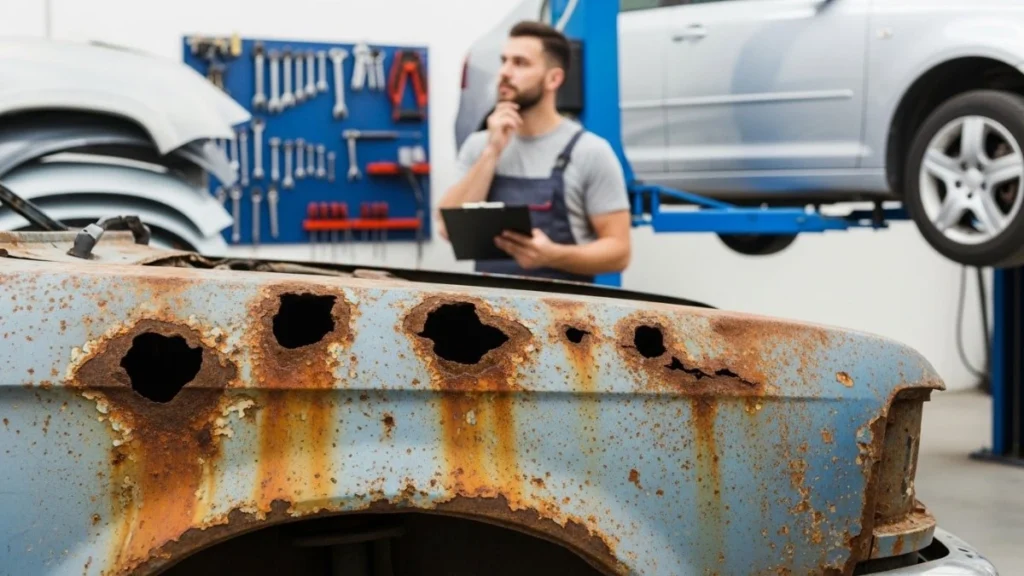
Not every rust hole should be repaired. In some cases, corrosion has progressed too far or weakened the metal structure beyond safe repair.
Understanding when to repair and when to replace parts can save drivers significant time and money.
Severe Structural Rust
Rust affecting structural components presents a serious safety concern.
Surface rust on body panels is usually cosmetic. Corrosion on frame rails, suspension mounts, or subframes can compromise the entire vehicle structure.
Severely rusted frame metal may crumble under pressure. When that happens, patching the damage cannot restore the original strength.
Structural corrosion should always be inspected by a qualified repair professional.
When Panel Replacement Is More Reliable
Rust repair works best when corrosion remains limited to a small area.
Once rust spreads across a large portion of a panel, replacement often becomes the better solution. Large holes typically indicate hidden corrosion inside the panel structure.
Water can collect between layers of metal where it continues damaging areas that cannot be seen from the outside.
Replacing the entire panel removes hidden rust and provides a clean foundation for paint.
DIY Repair Vs. Professional Auto Body Shops
Online tutorials often make rust repair appear simple, but real repairs require skill, patience, and specialized tools.
Improper rust removal, poor sanding technique, or incorrect filler application can lead to visible imperfections in the finished panel.
Paint matching also presents challenges. Modern vehicles use complex multi-layer paint systems that require precise color blending.
Professional technicians rely on tools such as MIG welders, paint booths, and computerized color-matching systems to achieve durable repairs.
Small cosmetic rust spots may be manageable for experienced DIYers. Larger rust holes usually benefit from professional repair.
Tips To Prevent Rust Holes From Returning
Repairing rust solves the immediate problem, but long-term protection depends on preventing corrosion from starting again.
Moisture, road salt, and damaged paint are the main causes of rust returning.
Preventive habits include:
- Wash your car regularly in winter
- Touch up paint damage quickly
- Apply rustproofing treatments when necessary
- Keep drain holes clear in doors and panels
Road salt buildup should be removed frequently during winter months. Washing the undercarriage helps prevent corrosion around suspension components and rocker panels.
Paint chips should also be repaired early. Even small scratches expose bare metal and allow rust to begin forming.
Protective coatings provide another layer of defense against moisture.
Final Thoughts
Rust holes can look intimidating, but many repairs are manageable when corrosion is addressed early and properly. Successful repair depends on removing every trace of rust, rebuilding the damaged area with durable materials, and sealing the panel against moisture.
Temporary cosmetic patches may hide damage for a short time, but thorough rust removal and proper protection create repairs that last much longer.
Drivers should also recognize when replacement or professional repair is the better option. Structural corrosion, large perforations, and hidden rust often require specialized tools and expertise.
At AHS Rankers, the goal is to provide clear, practical automotive guidance that helps drivers make informed decisions rather than relying on promotional claims or paid listings.
Add your first comment to this post